About This Recipe
This recipe supports a blood sugar-friendly diet. Consult your healthcare provider or registered dietitian for personalized nutrition advice. Nutrition data based on USDA FoodData Central.
Why You'll Love It
- Designed to minimize blood glucose spikes — every ingredient has a purpose
- 34g protein + 11g fiber = sustained energy for 5+ hours
- Ready in 30 minutes — no complicated cooking techniques
- Great for meal prep: store components separately for 4 days
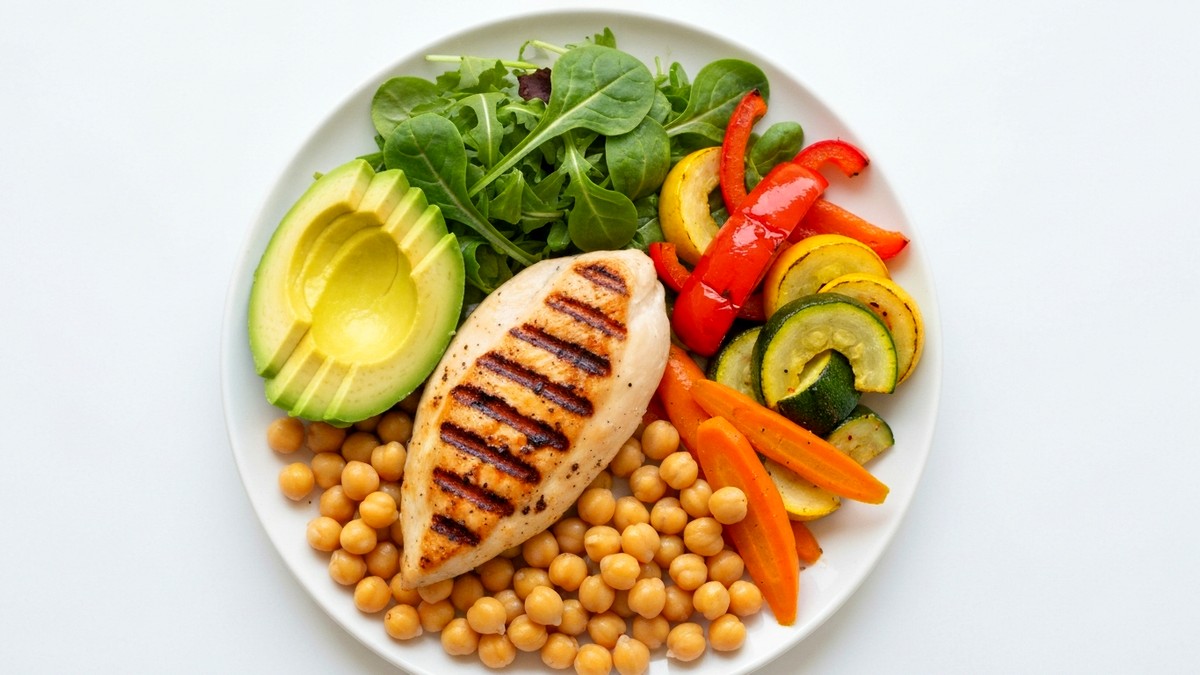
Insulin Resistance Meal Bowl
Ingredients
- 4 chicken breasts (~600g)
- 1½ cups dry quinoa
- 1 can (400g) chickpeas, drained
- 4 cups mixed greens
- 2 avocados, sliced
- 1 cup cherry tomatoes, halved
- 1 cucumber, sliced
- 3 tbsp olive oil
- 2 tsp garlic powder
- 1 tsp smoked paprika
- Lemon Dressing:
- 3 tbsp lemon juice
- 2 tbsp olive oil
- 1 tsp Dijon mustard
- 1 garlic clove, minced
- 1 tsp honey
Instructions
- 1Season chicken with garlic powder, paprika, olive oil, salt, pepper.
- 2Grill or pan-sear 6–7 min per side to 165°F. Rest, then slice.
- 3Cook quinoa in 2:1 water ratio while chicken cooks.
- 4Crispy chickpeas — pan-fry in olive oil with paprika for 8 min.
- 5Make dressing — whisk lemon, oil, mustard, garlic, honey.
- 6Build the bowl — quinoa, greens, chicken, chickpeas, avocado, tomatoes, dressing.
Step-by-Step Instructions
-
1
Season and cook the chicken
Pat chicken breasts dry. Mix garlic powder, smoked paprika, salt, and pepper. Coat chicken in 2 tbsp olive oil and the spice blend. Heat a grill pan or cast-iron skillet over medium-high heat until very hot. Cook chicken 6–7 minutes per side — don't move it while cooking; you want a proper sear that seals in the juices. The internal temperature should reach 165°F. Let rest for 5 minutes before slicing diagonally.
-
2
Cook the quinoa
Rinse quinoa, then add to a saucepan with 3 cups water and a pinch of salt. Bring to a boil, reduce to low, cover and cook 15 minutes. Remove from heat and let steam 5 minutes. Fluff with a fork. Quinoa's glycemic index is 53 — significantly lower than white rice (72) or white bread (75). It digests slowly and provides sustained energy without blood sugar spikes.
-
3
Make crispy chickpeas
Drain and thoroughly dry the chickpeas with paper towels — moisture is the enemy of crispiness. Heat 1 tbsp olive oil in a skillet over medium-high heat. Add chickpeas with a pinch of smoked paprika and salt. Cook 8–10 minutes, shaking the pan occasionally, until the chickpeas are golden and slightly crispy on the outside. Chickpeas have a glycemic index of just 28 — one of the lowest of any carbohydrate-containing food — making them ideal for insulin resistance management.
-
4
Make the lemon dressing
Whisk together fresh lemon juice, extra virgin olive oil, Dijon mustard, minced garlic, honey, and a pinch of salt until fully emulsified. The vinegar and citric acid in this dressing serve a metabolic purpose beyond flavor — acidic foods slow gastric emptying, which blunts the postprandial glucose spike from the meal by 20–30% according to multiple clinical trials.
-
5
Build the bowl and eat the right way
Start with a quinoa base, add a large handful of mixed greens, fan the chicken slices over the top, add a scoop of crispy chickpeas, half an avocado (sliced), cherry tomatoes, and cucumber slices. Drizzle generously with the lemon dressing. Eat in this order for optimal blood sugar: greens and vegetables first, then protein, then the quinoa. This simple eating order can reduce postprandial blood glucose by up to 37%.
Frequently Asked Questions
Nutrition Per Bowl