About This Recipe
Nutrition estimates based on USDA FoodData Central. Values are per serving and may vary.
Why You'll Love It
- 5 prebiotic + probiotic ingredients in one bowl — maximum microbiome support
- 14g fiber per serving — feeds beneficial bacteria all day long
- Zero cooking required — the fastest gut-healing meal you can make
- Bold, complex flavors: fermented, umami, nutty, fresh, and slightly spicy
Gut Health Salad
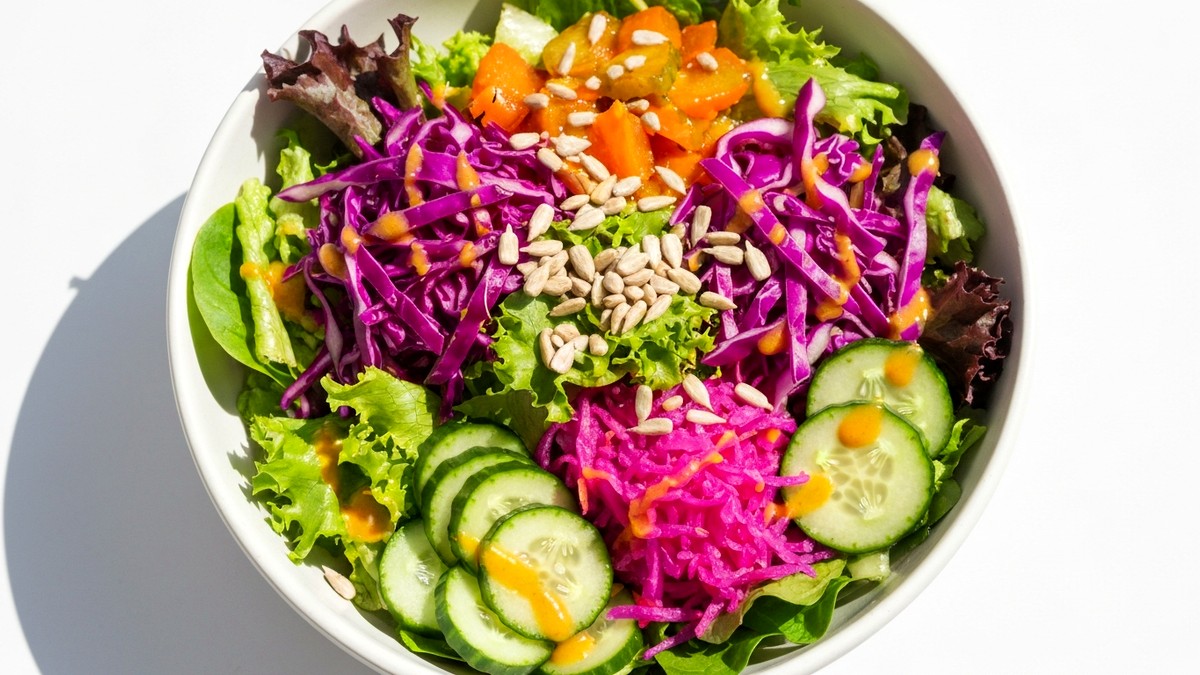
Ingredients
- 4 cups mixed greens
- ½ cup shredded purple cabbage
- ½ cup kimchi
- ¼ cup sauerkraut
- ½ cup chickpeas, drained
- 1 small raw beet, grated
- 4 asparagus spears, thinly sliced
- 2 tbsp sunflower seeds
- 2 tbsp pumpkin seeds
- 1 tbsp flaxseeds
- ½ avocado, diced
- Miso Dressing:
- 1 tbsp white miso paste
- 2 tbsp rice vinegar
- 1 tbsp sesame oil
- 1 tsp honey
- 1 tsp fresh ginger, grated
- 2 tbsp warm water
Instructions
- 1Make miso dressing — whisk miso, rice vinegar, sesame oil, honey, ginger, water until smooth.
- 2Build greens base — mixed greens and shredded purple cabbage in a large bowl.
- 3Add prebiotic layer — raw asparagus, grated beet, chickpeas.
- 4Add probiotic layer — spoon kimchi and sauerkraut alongside vegetables.
- 5Top with seeds — sunflower, pumpkin, flaxseeds, and diced avocado.
- 6Drizzle and serve immediately for maximum live probiotic benefit.
The Science Behind Each Ingredient
- Kimchi (Probiotic): Contains L. kimchii and L. plantarum — two of the most studied strains for gut barrier integrity. A 2021 Stanford study found kimchi consumption measurably increases microbiome diversity in 10 weeks.
- Sauerkraut (Probiotic): Provides Lactobacillus strains that produce short-chain fatty acids (SCFAs) — the primary fuel for colon cells and a key signal for reducing gut inflammation.
- Asparagus (Prebiotic): One of the richest sources of inulin — a prebiotic fiber that selectively feeds Bifidobacterium, the gut bacteria most associated with immune function and mental health.
- Raw Beet (Prebiotic): Contains betaine and oligosaccharides that feed Faecalibacterium prausnitzii — the gut bacterium most strongly associated with reduced inflammation and colon health.
- Chickpeas (Prebiotic): 6g fiber per half cup, predominantly resistant starch that survives digestion and feeds bacteria in the colon directly.
- Flaxseeds (Prebiotic): Contain lignans that are converted by gut bacteria into enterolignans — compounds that modulate estrogen, reduce inflammation, and protect the gut lining.
- Miso (Probiotic + Umami): Fermented soybean paste containing live cultures plus isoflavones that support healthy estrogen metabolism. Use unpasteurized miso for maximum probiotic benefit.
Step-by-Step Instructions
-
1
Make the miso ginger dressing first
In a small bowl, whisk together white miso paste and warm water until the miso is completely dissolved. Add rice vinegar, sesame oil, honey, and freshly grated ginger. Whisk until fully emulsified. The warm water is key — it activates the miso and makes it easier to blend. Use unpasteurized white miso for active probiotic cultures — look for it in the refrigerated section of Asian markets or health food stores. Once mixed, taste and adjust: more vinegar for tartness, more honey for sweetness, more ginger for heat.
-
2
Build the prebiotic base
Add 4 cups of mixed greens (aim for a variety: spinach for magnesium, kale for sulforaphane, arugula for nitrates) and ½ cup shredded raw purple cabbage to a wide salad bowl. Thinly slice the raw asparagus spears on the diagonal — raw asparagus has a higher inulin content than cooked asparagus, since heat partially degrades this prebiotic fiber. Grate the raw beet directly into the bowl using a box grater. Add the drained chickpeas.
-
3
Add the fermented probiotic foods
Spoon the kimchi and sauerkraut onto the salad without mixing — this preserves their distinct flavors. Important: never heat kimchi or sauerkraut before adding to a salad (heat kills the live cultures). Use room-temperature fermented foods or bring them to room temperature from the fridge before serving. The kimchi and sauerkraut brine can also be drizzled sparingly as an additional gut-healing dressing — it's extremely rich in lactic acid bacteria.
-
4
Add seeds, avocado, and dress
Scatter sunflower seeds, pumpkin seeds, and ground flaxseeds over the salad — the variety of seeds provides different prebiotic fiber types that feed different bacterial populations in your microbiome. Add diced avocado for healthy fats and creaminess. Drizzle the miso dressing over everything and give the salad a gentle toss. Serve immediately — the fermented foods and greens are best eaten fresh, before the dressing begins to wilt the greens or deactivate cultures.
Add More Protein
- Soft-boiled eggs (2 eggs): Adds 12g protein. The cooked egg white is a prebiotic for Bifidobacterium. Don't overcook — a jammy yolk provides fat-soluble vitamins B12, D, and K2.
- Tempeh (100g): The best vegan option — tempeh is fermented soy, so it's both a protein source (19g per 100g) and a probiotic food simultaneously.
- Grilled salmon (150g): Adds 30g protein and omega-3s that support gut barrier integrity and reduce intestinal inflammation.
- Smoked sardines (1 tin): Packed with omega-3s, calcium (from the bones), and 20g protein — the ultimate gut-brain axis food.
Frequently Asked Questions
Nutrition Per Serving